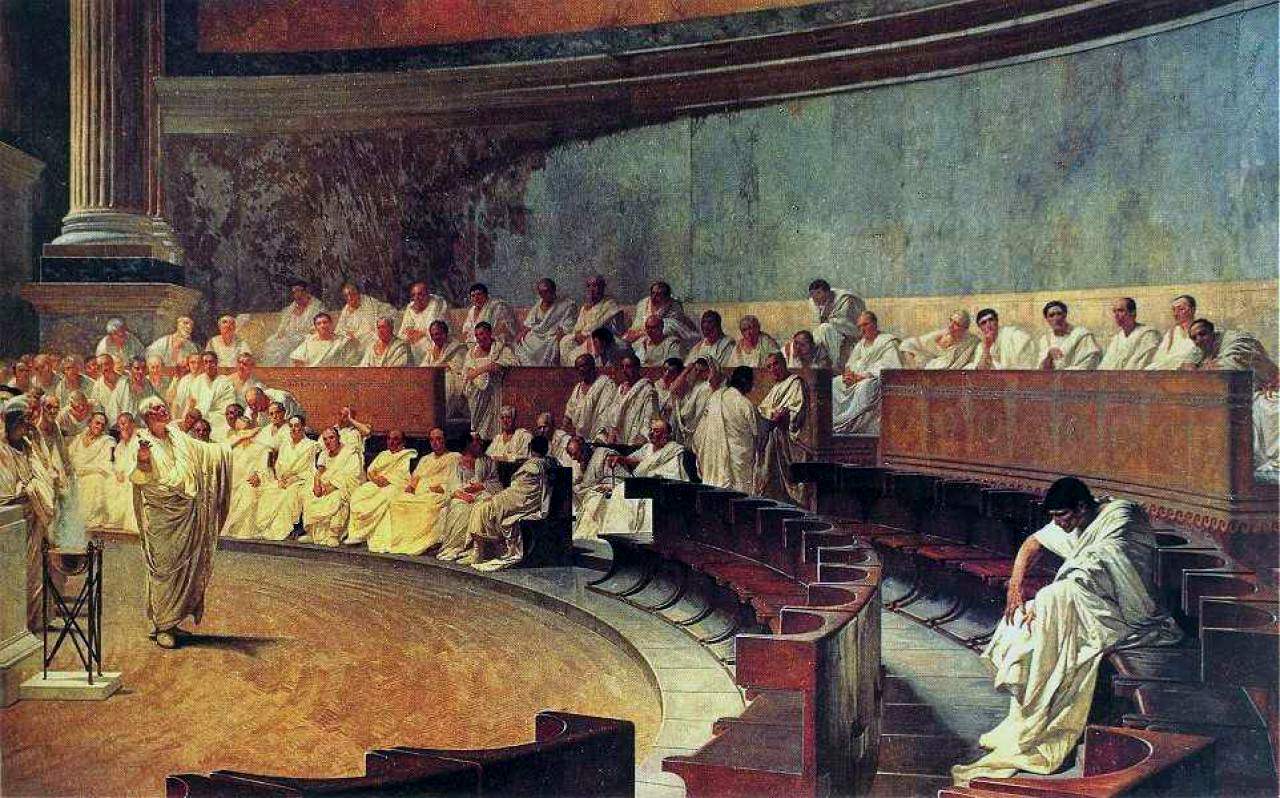
Praetoria derives its name from the praetor of Roman law.
The praetor never decided cases, and never replaced judicial judgment.
The Praetor's role came before judgment.
The praetor received claims, clarified what was being alleged, and framed the dispute into a form that could be decided. He organised facts, identified what needed to be addressed, and set the procedural context.
Only then did the case pass to the iudex, who assessed the facts, applied the law, and decided the outcome.
Judgment belonged to the iudex; Context belonged to the praetor.
Praetoria follows the same division of roles.
Modern Legal teams can't be replaced by AI. Legal judgment is the point. What slows teams down is the work that comes before judgment. missing facts, unclear scope, and incomplete context.
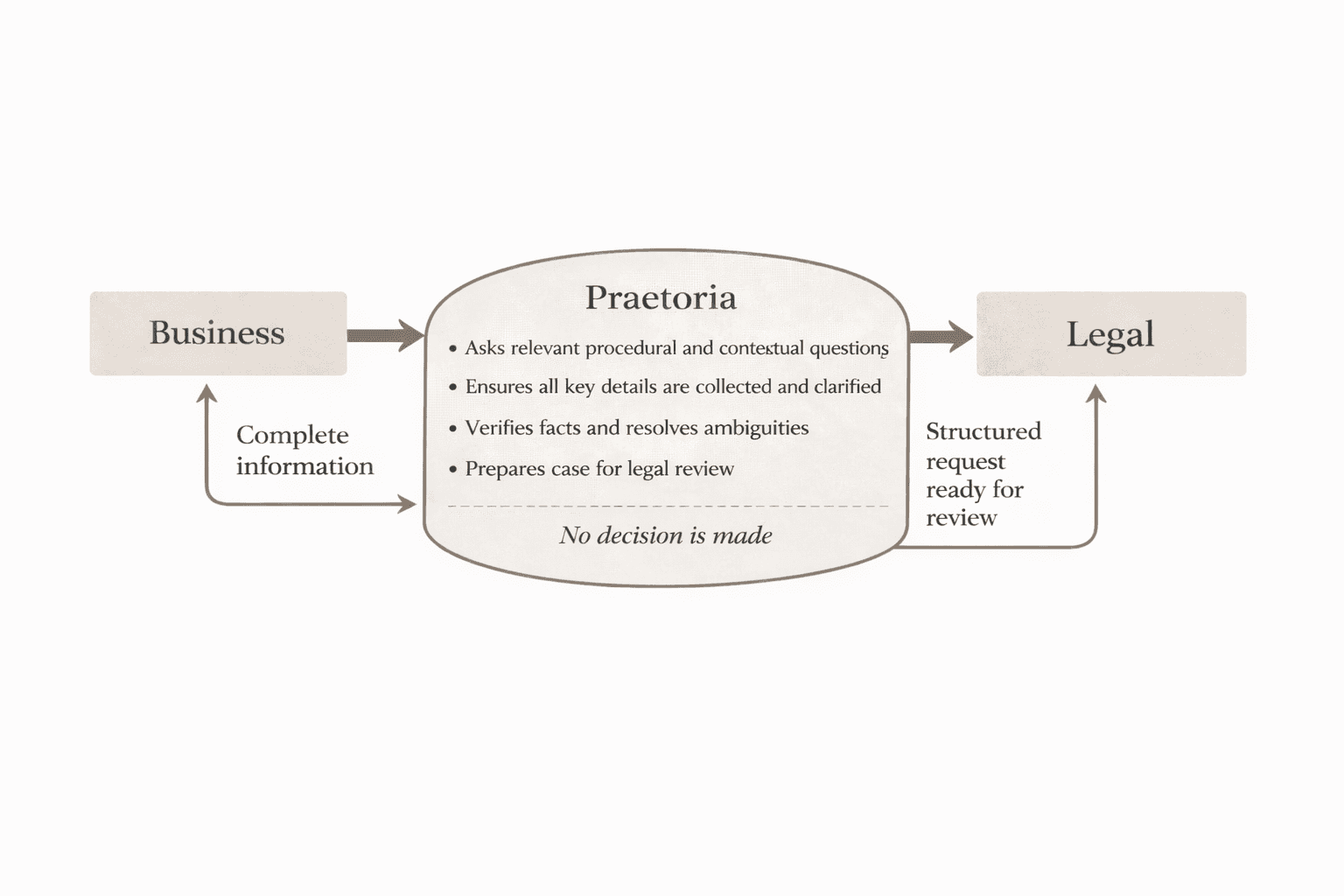
Praetoria performs the praetorian function in modern legal workflows. It structures requests, gathers missing information, and records the factual context.
Legal remains the iudex.
Similarly to how the Praetor structured legal disputes, Praetoria wants to do the same for in-house legal.
Praetoria will do the fact-finding, ask procedural questions and get a holistic view of the request before reaching the lawyer.
Ultimately, the goal is to improve how Legal does it's work. Not by replacing the judgment of the lawyer, but enhancing it by providing more and better date for the judgment to be it's best.
What’s improved by using Praetoria
Clearer contextual understanding
Requests arrive with documented information on market, jurisdiction, audience, and use case, rather than assumptions reconstructed after the fact.
Structured fact-finding before review
Missing information is identified and clarified upfront, reducing back-and-forth once Legal review has begun.Consistent intake without rigid templates
Praetoria adapts to the content submitted, rather than forcing stakeholders into static forms that rarely capture what actually mattersPreserved decision context
Questions asked, answers given, and materials submitted are recorded alongside the request, creating a traceable record for future reference.More time spent on judgment
Legal teams spend less time assembling context and more time applying expertise where it adds real value.